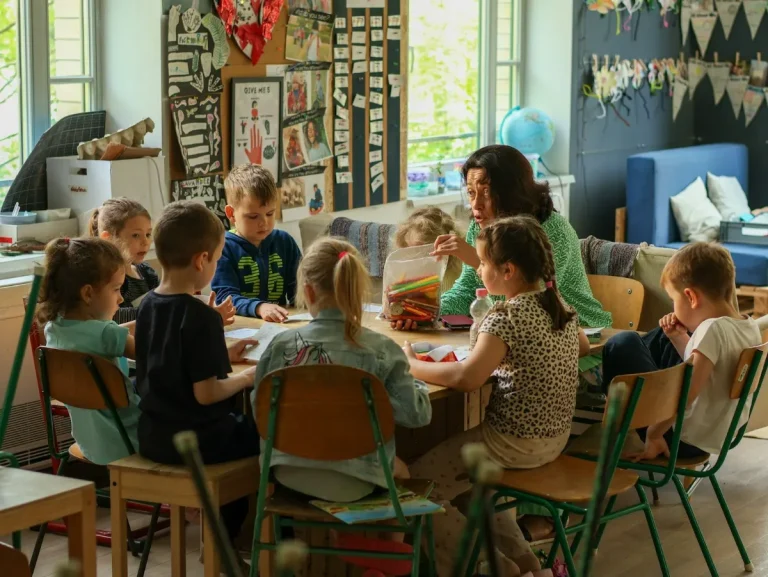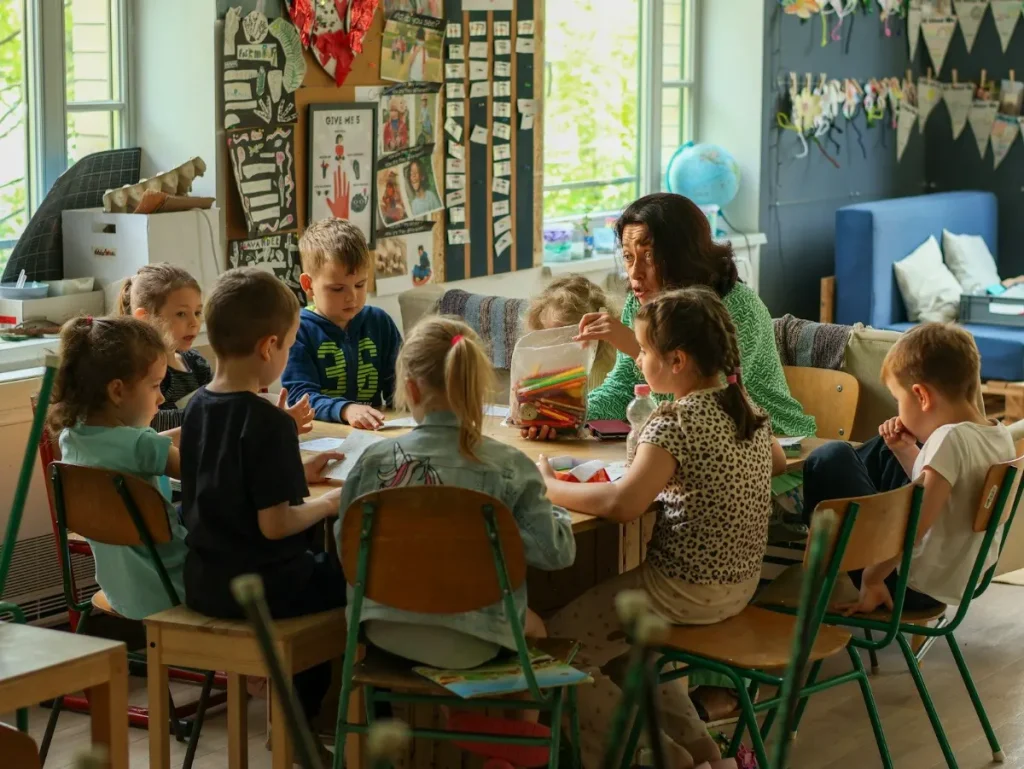

Positive reinforcement is one of the most effective and least expensive tools a teacher has. When a student does what you asked and something good follows, that behavior is more likely to happen again. The good news is that the most powerful reinforcer in most classrooms costs nothing: specific, sincere attention from you.
This guide explains what positive reinforcement is (and isn’t), gives 12 classroom examples you can use tomorrow, and covers the common mistakes that make reinforcement stop working.
What is positive reinforcement?
Positive reinforcement happens when something is added after a behavior and that behavior increases in the future. “Positive” means adding something, not that it feels nice. If you praise a student for starting work right away and they start right away more often, the praise was a reinforcer.
Two things follow from that definition. First, reinforcement is defined by its effect. A sticker is only a reinforcer if it actually makes the behavior happen more. Second, reinforcement is happening in your classroom all the time, whether you plan it or not. When a student calls out and gets a laugh from classmates, that attention can reinforce calling out. Planning your reinforcement means making sure the behaviors you want get more attention than the ones you don’t.
Why it works better than relying on consequences
Research on effective classroom management consistently points to the same core practices: clear expectations that are taught and practiced, active supervision and frequent acknowledgment of appropriate behavior (Simonsen et al., 2008). Reprimands can stop a behavior in the moment, but they don’t teach what to do instead, and heavy use of corrections can harm relationships and increase problem behavior over time. Behavior-specific praise, by contrast, has been linked to better on-task behavior across grade levels (Royer et al., 2019).
A useful guideline is to aim for at least four positive interactions for every correction. You don’t need to count perfectly. If you notice you are mostly correcting, that is a signal to look for more behavior to recognize.
12 examples of positive reinforcement in the classroom
Social and verbal reinforcement
- Behavior-specific praise. Name exactly what the student did: “You checked your work before turning it in. That’s what careful mathematicians do.”
- Quiet, private praise. A whisper or a quick comment at a student’s desk works well for older students or students who are embarrassed by public attention.
- Nonverbal acknowledgment. A thumbs-up, a nod or a smile across the room reinforces without interrupting instruction.
- Positive notes or calls home. A two-sentence email to a family about something their child did well is powerful for students and builds trust with families.
Activity and privilege reinforcement
- Classroom jobs. Line leader, materials manager or tech helper can be earned for meeting goals.
- Choice time. A few minutes to choose an activity, a seat or the order of tasks.
- Extra time on a preferred activity. Reading, drawing, a learning game or time with a favorite tool.
- Lunch or recess with the teacher. For many students, time with you is the most valued reward.
Class-wide and token systems
- Class-wide goal. Add a marble to a jar or a letter to a word on the board when the class meets an expectation. When the goal is reached, the class earns a short celebration.
- Team points. Table groups earn points for working together, cleaning up or transitioning quickly.
- Token economy. Students earn tokens or points that can be exchanged for rewards. Tokens should always be paired with specific praise.
- Individual point sheets. For a student who needs more support, a private behavior chart with clear goals and frequent feedback can make reinforcement more consistent.
How to make reinforcement work
- Be specific. “Good job” is pleasant but vague. Specific praise teaches the expectation every time you use it.
- Be immediate. Reinforce as close to the behavior as you can, especially when teaching something new.
- Reinforce often at first, then fade. When students are learning a new routine, acknowledge it frequently. Once it is consistent, reinforce less often and less predictably.
- Let students help choose. What you think is rewarding may not be. Ask students or offer a menu of choices.
- Catch quiet students too. It is easy to give most of your attention to students who demand it. Make a point of recognizing students who are meeting expectations without fuss.
- Never take earned rewards away. Removing points a student already earned often leads to frustration and undoes the motivation you built.
Common mistakes to avoid
- Using rewards as bribes. Offering a reward to stop a behavior that is already happening (“If you stop yelling, you can have a sticker”) can reinforce the yelling. Set up the reward before the behavior.
- Public behavior charts. Clip charts and color charts often embarrass the students who struggle most. Keep individual tracking private.
- Expecting the same reward to work forever. Rotate rewards and check in with students about what they want to earn.
- Ignoring the function of a behavior. If a student keeps misbehaving, reinforcing other behavior may not be enough. Look at what the student gets or avoids after the behavior, and talk with your campus team.
Putting it together
Start small. Pick one routine that is not going well, teach it again, and plan to recognize students who do it right with specific praise. Track whether things improve over a week or two. For a whole-class approach, our free classroom management plan template walks you through expectations, routines and how you will acknowledge students.
References
- Royer, D. J., Lane, K. L., Dunlap, K. D., & Ennis, R. P. (2019). A systematic review of teacher-delivered behavior-specific praise on K–12 student performance. Remedial and Special Education, 40(2), 112–128.
- Simonsen, B., Fairbanks, S., Briesch, A., Myers, D., & Sugai, G. (2008). Evidence-based practices in classroom management: Considerations for research to practice. Education and Treatment of Children, 31(3), 351–380.